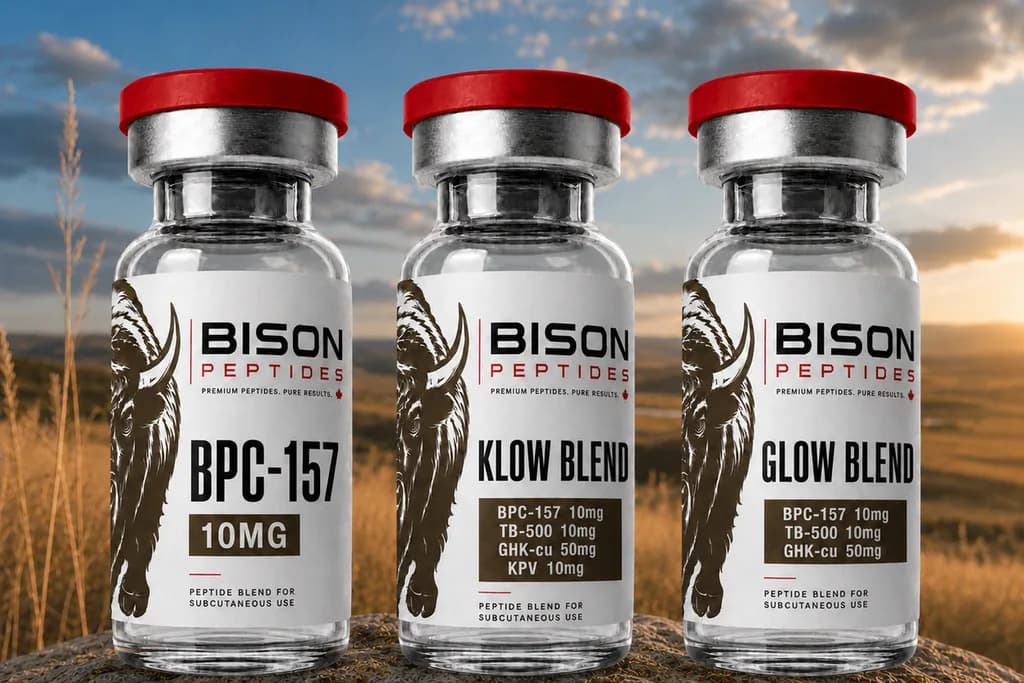
How to Reconstitute Peptides: A Step-by-Step Guide
What is reconstitution?
Peptides ship as a lyophilized (freeze-dried) powder to preserve stability. Reconstitution is simply the process of dissolving that powder in bacteriostatic water so it can be accurately measured and drawn. Done correctly, it takes under five minutes.
The amount of water you add determines the concentration — and therefore how much you draw into the syringe for a given dose. More water means larger, easier-to-measure draws; it never changes the strength of the dose itself.
What you'll need
- Your lyophilized peptide vial (COA-verified)
- Bacteriostatic water
- A sterile syringe for mixing
- Alcohol swabs for both vial tops
- A U-100 insulin syringe for measuring doses
Step-by-step process
- Swab both vials. Wipe the rubber stoppers of the peptide vial and the bacteriostatic water with an alcohol swab.
- Draw your water. Use our dosing calculator to choose a volume — 2mL for a 10mg vial is a common starting point.
- Add water slowly. Angle the needle so water runs down the inside wall of the vial rather than blasting the powder directly.
- Swirl, don't shake. Gently roll or swirl the vial until the solution is fully clear. Shaking can degrade the peptide.
- Label and refrigerate. Note the date and concentration on the vial and store it in the fridge.
Storage after mixing
Reconstituted peptides should be kept refrigerated and protected from light. Bacteriostatic water contains a preservative that keeps the solution usable for several weeks; always follow the guidance on your product page for the specific peptide.
Common mistakes to avoid
The three we see most often: shaking the vial instead of swirling, using sterile water instead of bacteriostatic water for multi-dose vials, and eyeballing doses instead of calculating the draw. All three are easy to avoid — and the calculator handles the math for you.