Strongest human evidence
Weight reduction
Randomized Phase 2 research reported dose-dependent average weight changes over 48 weeks.
 COA Verified
Weight Loss Peptides
$150.00
Purchase option
Strength
Buy more, save more
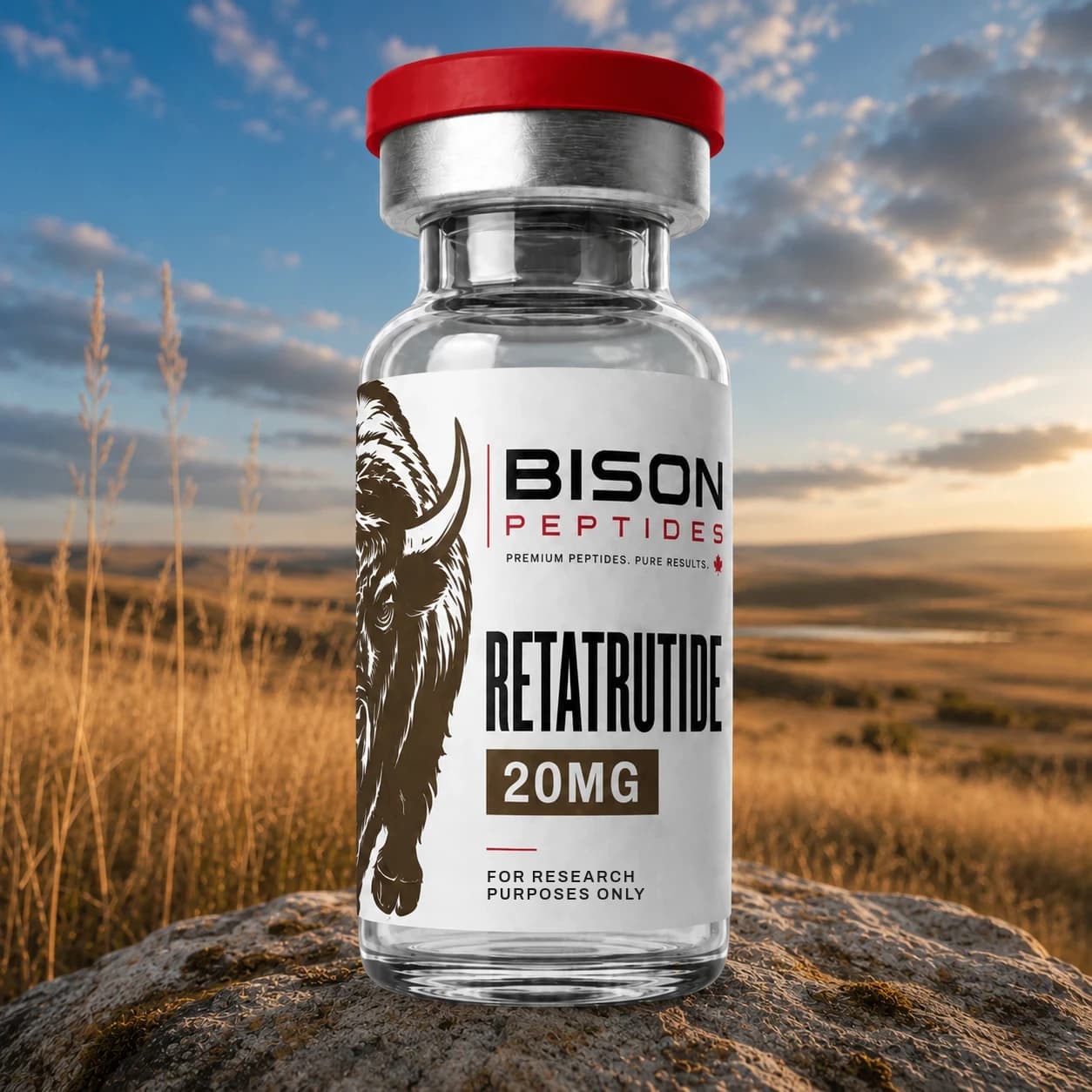
Retatrutide (LY3437943) is an investigational single-molecule peptide designed to activate GLP-1, GIP, and glucagon receptors. Bison Peptides supplies 10mg and 20mg lyophilized vials for laboratory and in-vitro research only, with product-linked batch documentation.
Retatrutide is not approved by Health Canada or any other regulatory authority for human or veterinary use. It is supplied strictly as a research material.
Orders ship from within Canada in discreet packaging. Express delivery is typically 1–3 business days after dispatch.
Standard returns are not accepted because research materials cannot be safely restocked after delivery. Contact support promptly about damaged, incorrect, or compromised items.
Reconstitution calculator
Enter three known values. The calculator converts the total vial amount and water added into a concentration, then shows the liquid volume and equivalent U-100 syringe units for the quantity entered.
The calculator does not choose a quantity. It converts the quantity you enter. One milligram equals 1,000 micrograms.
Bacteriostatic water is generally the most appropriate choice for multi-use research preparation because it contains a preservative for repeated vial access.
Retatrutide evidence and practical guide
Retatrutide, also called LY3437943, is a once-weekly investigational triple agonist being studied for obesity, type 2 diabetes, and related cardiometabolic outcomes. It activates GIP, GLP-1, and glucagon receptors in one molecule, combining appetite, glucose-regulation, and energy-balance pathways that are usually discussed separately.
Human trials have reported substantial average weight reduction and improvements in several metabolic measurements, but the results are population averages from controlled studies rather than a prediction for any individual. The guide below separates peer-reviewed findings from newer company-reported Phase 3 results and explains what the 10mg and 20mg vial labels actually mean.
Strongest human evidence
Randomized Phase 2 research reported dose-dependent average weight changes over 48 weeks.
Metabolic research
Trials in adults with type 2 diabetes have measured A1C, fasting glucose, and body weight.
Additional outcomes
Phase 3 programs have evaluated waist circumference, blood pressure, lipids, and related complications.
Product decision
The larger vial contains more total material. It is not automatically a stronger individual amount.
The table separates peer-reviewed evidence from newer topline announcements so the strength of each claim is clear.
| Evidence | Population and duration | What was reported | How to interpret it |
|---|---|---|---|
| Peer-reviewed Phase 2 obesity trial | 338 adults, 48 weeks | Dose-dependent average weight reduction, reaching 24.2% in the 12mg group versus 2.1% with placebo | Randomized human evidence; not an individual prediction |
| Peer-reviewed Phase 2 type 2 diabetes trial | Adults with type 2 diabetes, 36 weeks | Dose-dependent improvements in A1C and body weight | Useful human evidence; longer-term safety was still under study |
| Phase 3 TRIUMPH-2 topline results | Obesity or overweight with type 2 diabetes, 80 weeks | Lilly reported average weight reduction up to 20.8% and A1C reduction up to 1.6 percentage points | Company-reported results awaiting full peer-reviewed publication |
| Phase 3 TRIUMPH-3 topline results | Severe obesity with cardiovascular disease, 80 weeks | Lilly reported average weight reduction up to 22.6% plus changes in several cardiometabolic markers | Company-reported results awaiting full peer-reviewed publication |
Trial participants received Lilly's investigational formulation under controlled protocols. Results cannot verify the identity, dose accuracy, sterility, or performance of a separately sourced vial.
Retatrutide is a single peptide engineered to activate three hormone receptors. GLP-1 and GIP signaling are associated with appetite and glucose-dependent insulin pathways, while glucagon-receptor activity adds an energy-expenditure and metabolic-signaling component. This is why retatrutide is commonly described as a triple agonist rather than the inaccurate nickname GLP-3.
The main human research questions are whether this combined mechanism can support meaningful weight reduction, improve A1C and other metabolic measurements in people with type 2 diabetes, and affect obesity-related complications. Additional trials are studying cardiovascular and kidney outcomes, sleep apnea, osteoarthritis pain, fatty-liver disease, and chronic low-back pain.
The strongest published evidence concerns body weight. In the peer-reviewed Phase 2 obesity trial, average weight change at 48 weeks ranged from 8.7% in the 1mg group to 24.2% in the 12mg group, compared with 2.1% with placebo. The response was dose-dependent, and participants were followed as part of a randomized clinical trial with medical monitoring.
Research in type 2 diabetes has also reported dose-dependent reductions in A1C and body weight. In July 2026, Lilly announced additional Phase 3 topline findings involving weight, A1C, waist circumference, blood pressure, triglycerides, and other cardiometabolic measurements. Those newer results are promising but should remain labelled as company-reported topline data until full peer-reviewed publications are available.
The compounds overlap in appetite and metabolic research, but they differ in receptor targets and evidence maturity.
| Compound | Receptor targets | Current evidence context | Key distinction |
|---|---|---|---|
| Semaglutide | GLP-1 | Authorized formulations and extensive Phase 3 evidence | Single-receptor agonist |
| Tirzepatide | GIP and GLP-1 | Authorized formulations and extensive Phase 3 evidence | Dual-receptor agonist |
| Retatrutide | GIP, GLP-1, and glucagon | Investigational with Phase 2 publications and Phase 3 topline results | Triple-receptor agonist |
The products have not been established as interchangeable. Cross-trial percentages are not head-to-head comparisons because populations, durations, protocols, and statistical methods differ.
The 10mg and 20mg labels describe the total nominal amount of retatrutide in the vial. The listed compound is the same. A 20mg vial contains twice as much total material, but it is not automatically a stronger individual amount, a faster option, or a better choice for someone new to the compound.
When comparing the two sizes, the practical differences are total material, purchase price, price per milligram, and the possibility of unused prepared material. The 10mg vial offers a smaller total quantity, while the 20mg vial may provide a lower cost per milligram for a protocol that already requires that quantity. Vial size should not be treated as a personal dosing recommendation.
If this is your first Retatrutide order and you are choosing between the two vial sizes, the 10mg option is usually the more practical first purchase. It has a lower upfront price and limits how much material could go unused if your plans change. It contains the same listed compound as the 20mg vial, just in a smaller total quantity.
Choose the 20mg option when you already expect to need twice the total material and want the better price per milligram shown in the product selector. A simple buying rule is: if you are still unsure how much total material you need, choose 10mg; if you already know you need the larger quantity and value is the priority, choose 20mg. The 20mg vial is not a different or more advanced version of Retatrutide.
Published Phase 2 obesity research evaluated once-weekly target amounts of 1mg, 4mg, 8mg, and 12mg. Some groups began at a lower amount before moving toward the assigned target. Phase 3 programs have used a 2mg starting amount followed by increases every four weeks toward assigned targets such as 4mg, 9mg, or 12mg. Researchers used this gradual approach to study tolerability while participants adjusted to the compound.
The useful distinction is between a starting amount, a target amount, and the total material in a vial. They are not the same number. A 10mg or 20mg vial describes total material, while a clinical-trial target describes the amount assigned at a particular stage of the study. Trial figures provide context for reading the evidence, not an individualized schedule.
The most common effects reported in Retatrutide trials were digestive, including nausea, diarrhea, constipation, vomiting, and reduced appetite. Most were described as mild to moderate, and the gradual increases used in the studies were intended to improve tolerability. Phase 2 research also reported increases in heart rate that varied by assigned amount and peaked around week 24.
A practical takeaway is to distinguish a temporary, manageable digestive effect from something persistent or severe. Ongoing vomiting or diarrhea can lead to dehydration, while severe abdominal pain, fainting, breathing difficulty, facial or throat swelling, confusion, symptoms of very low blood glucose, or a very rapid heartbeat warrant prompt medical assessment. Retatrutide's complete safety profile is still being studied.
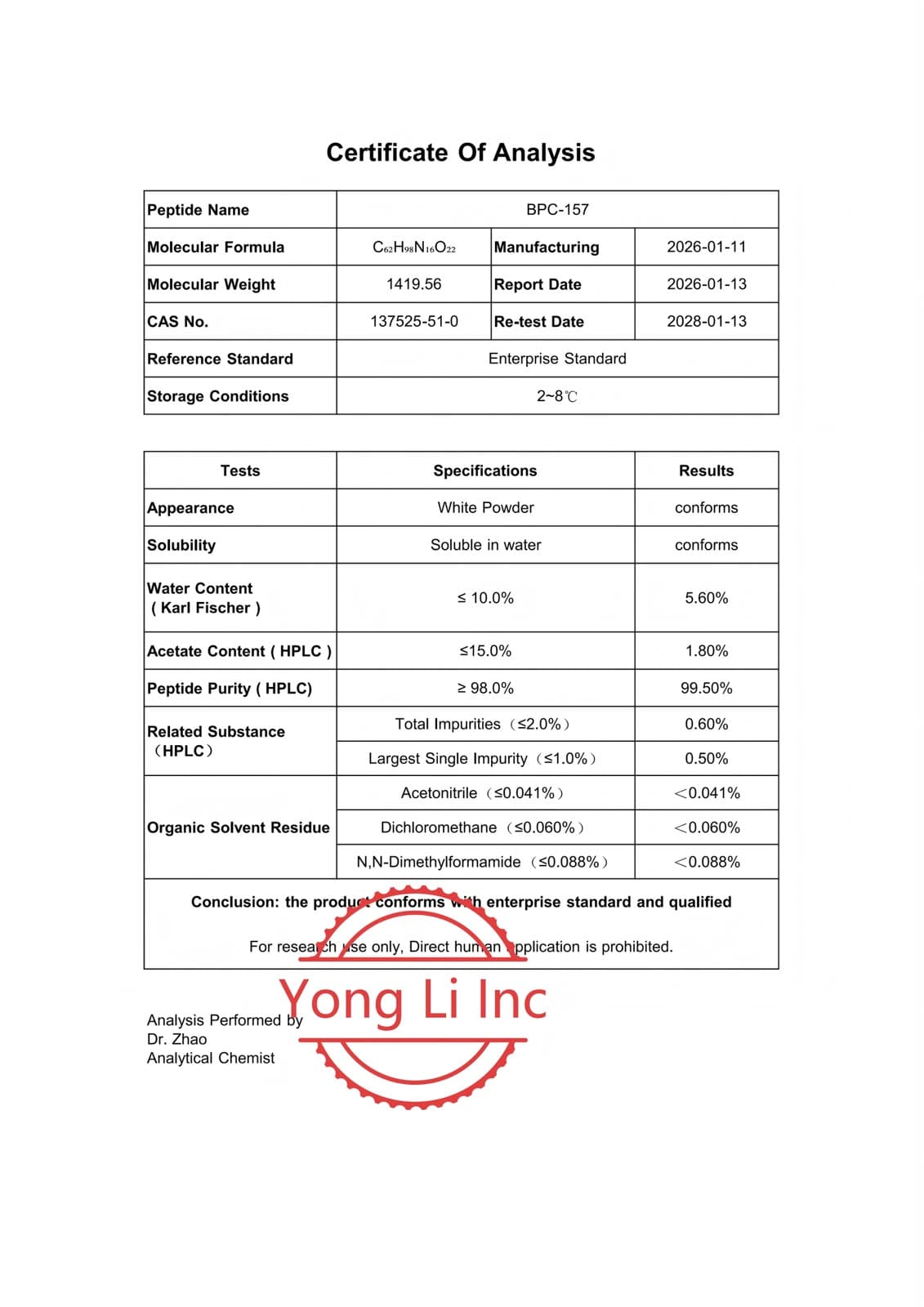
Before ordering, look for a product-linked certificate of analysis that identifies Retatrutide, the batch or lot, test date, analytical method, and reported identity or purity result. After delivery, compare the vial label and lot information with the documentation shown for the product rather than relying on a generic certificate.
Treat the COA as a checklist, not just a large purity percentage. Identity, purity, fill quantity, sterility, and endotoxin testing answer different questions. If a result is not listed, it should not be assumed. The product gallery provides the available batch documentation so buyers can review what was tested before placing an order.
Retatrutide remains investigational and is not currently authorized by Health Canada or any other regulatory agency for public use. This product is supplied as a technical laboratory research material and is not an approved prescription formulation. The information on this page summarizes published and registered research and is not an individual treatment or dosing recommendation.
Content reviewed August 11, 2026 by the Bison Peptides editorial team.
“I went with the 20mg option and was pleased with the entire order. The vial came securely packaged with clear labeling and no damage. The website was simple to navigate and everything from checkout through delivery went smoothly. I would order from here again.”
20mg ·
Andrew M. · Verified buyer
“The 10mg Retatrutide arrived looking exactly like the product photos. Nice label, secure vial, and professional packaging overall. This was my first purchase from the company and the experience gave me a good impression. No complaints at all with the order.”
10mg ·
Jason K. · Verified buyer
“I originally tried the smaller strength and decided to order the 20mg this time. Both orders have been consistent in terms of packaging and presentation. Everything was sealed properly and arrived in excellent condition. It's nice finding a Canadian option with a straightforward ordering process.”
20mg ·
Michael S. · Verified buyer
Retatrutide is primarily being studied for obesity, overweight, and type 2 diabetes. Human trials have measured body weight, A1C, waist circumference, blood pressure, lipids, and obesity-related complications. Other ongoing programs are examining cardiovascular and kidney outcomes, sleep apnea, osteoarthritis pain, fatty-liver disease, and chronic low-back pain. These are research outcomes, not guaranteed personal benefits.
The difference is the total nominal amount of material in the vial. A 20mg vial contains twice the total material of a 10mg vial. They list the same compound, and the larger vial is not automatically a stronger individual amount or a faster option.
Not in the way that question is usually meant. The label describes total material, not a ready-to-use concentration or recommended amount. Concentration depends on preparation, while an appropriate experimental amount depends on a defined protocol. The 20mg vial simply contains more total material.
For a first order, the 10mg vial is usually the more practical choice because it costs less up front and reduces the amount that could go unused if plans change. Choose 20mg when you already know you need twice the total material and want the better price per milligram. Both options contain the same listed compound; the 20mg vial simply contains more of it.
The peer-reviewed Phase 2 obesity trial evaluated once-weekly target amounts of 1mg, 4mg, 8mg, and 12mg, with lower starting amounts used in some groups. Phase 3 programs have included target amounts such as 4mg, 9mg, and 12mg with stepwise escalation and medical monitoring. These figures describe trial design and are not personal dosing instructions.
The Phase 2 obesity publication reported outcomes at 24 and 48 weeks, with average weight change continuing between those time points in several groups. Phase 3 topline results have reported primary outcomes at 80 weeks. Individual responses varied, and trial averages should not be treated as a personal timeline.
The most frequently reported effects have been nausea, diarrhea, constipation, vomiting, and reduced appetite. Trials also reported treatment discontinuations because of adverse effects, and Phase 2 research found dose-dependent increases in heart rate. Retatrutide's complete safety profile is still being evaluated.
Semaglutide targets GLP-1, Tirzepatide targets GIP and GLP-1, and Retatrutide targets GIP, GLP-1, and glucagon. Semaglutide and Tirzepatide have authorized prescription formulations, while Retatrutide remains investigational. Results from separate trials should not be compared as if they came from a head-to-head study.
A COA can report identity, purity, analytical method, batch information, and test date. A purity result by itself does not verify sterility, endotoxin level, fill accuracy, stability after preparation, or suitability for injection.
No. Retatrutide remains investigational and is not currently authorized by Health Canada for public use. Health Canada has specifically warned consumers about unauthorized injectable peptide products, including Retatrutide and items labelled for research use only.