Most common interest
Tendon and soft-tissue recovery
Animal studies examine tendon, ligament, muscle, and connective-tissue repair pathways.
 COA Verified
Healing Peptides
$65.00
Purchase option
Strength
Buy more, save more
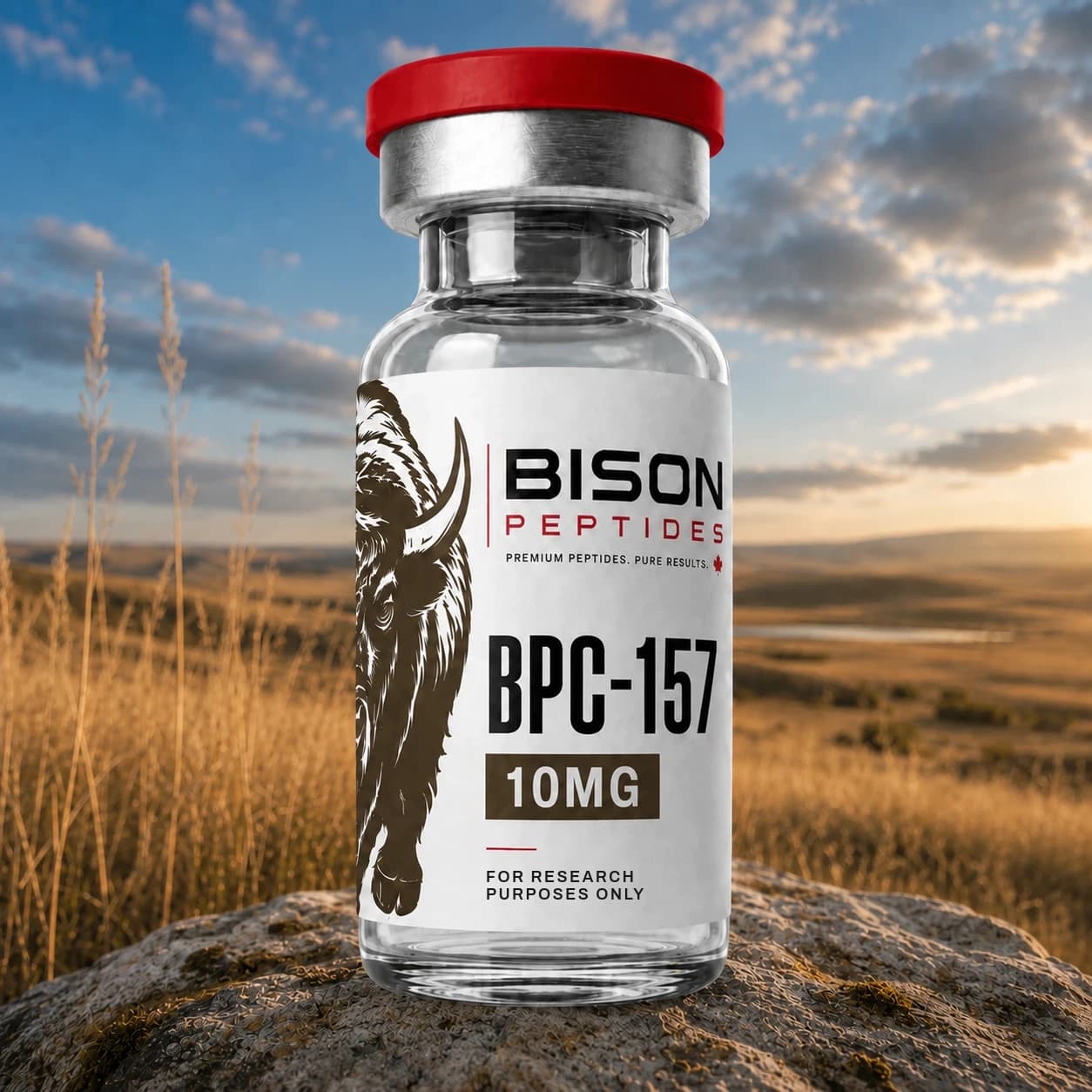
BPC-157 is a synthetic 15-amino-acid peptide studied primarily in preclinical gastrointestinal, vascular, and tissue-response models. Bison Peptides supplies a 10mg lyophilized vial with product-linked certificate of analysis images.
BPC-157 is not approved by Health Canada for consumer use. This material is supplied only for qualified laboratory and in-vitro research and is not intended for human or veterinary administration.
Orders ship from within Canada in discreet packaging. Express delivery is typically 1–3 business days after dispatch.
Standard returns are not accepted because research materials cannot be safely restocked after delivery. Contact support promptly about damaged, incorrect, or compromised items.
Reconstitution calculator
Enter three known values. The calculator converts the total vial amount and water added into a concentration, then shows the liquid volume and equivalent U-100 syringe units for the quantity entered.
The calculator does not choose a quantity. It converts the quantity you enter. One milligram equals 1,000 micrograms.
Bacteriostatic water is generally the most appropriate choice for multi-use research preparation because it contains a preservative for repeated vial access.
BPC-157 buyer and evidence guide
People usually compare BPC-157 when they are researching tendon, ligament, muscle, joint, or digestive recovery. The compound is a synthetic 15-amino-acid peptide associated with a gastric protein fragment, and its most discussed findings involve tissue response, blood-vessel signaling, and gastrointestinal models.
The important buying distinction is evidence quality. Results are largely from cells and animals, with very limited human research, so BPC-157 has more biological plausibility than proven clinical outcomes. This guide explains what the research suggests, where it remains uncertain, and how the 10mg vial compares with TB-500 and blend options.
Most common interest
Animal studies examine tendon, ligament, muscle, and connective-tissue repair pathways.
Secondary interest
Preclinical work includes gastric, intestinal, vascular, and inflammatory injury models.
Evidence reality
Human studies are too small and limited to establish effectiveness or a dependable safety profile.
Product decision
Best suited to buyers who want standalone BPC-157 rather than a fixed multi-peptide blend.
The evidence is strongest for biological mechanisms and animal injury models, not clinical outcomes in people.
| Evidence | What was studied | What it suggests | Buyer takeaway |
|---|---|---|---|
| Animal musculoskeletal studies | Tendon, ligament, muscle, and bone-adjacent injury models | Possible effects on repair signaling and tissue organization | Promising but not proof of human recovery |
| Animal gastrointestinal studies | Gastric and intestinal injury models | Possible cytoprotective and vascular effects | Does not establish treatment of a digestive condition |
| Published human evidence | Fewer than 30 participants across small studies | Early tolerability or exploratory signals only | Too limited for reliable benefit or safety estimates |
The product format has not been tested in the cited studies. A COA documents selected batch attributes, not clinical performance.
BPC-157 is commonly described as a stable gastric pentadecapeptide. Buyers are typically interested in it for stubborn soft-tissue issues, training recovery, or digestive research because animal studies report effects involving fibroblasts, angiogenesis, nitric-oxide signaling, and tissue organization.
Those mechanisms explain the interest, but they are not the same as a demonstrated human result. A 2026 review identified fewer than 30 total participants across the published human literature, which is not enough to estimate how reliably it works or characterize uncommon adverse effects.
In rodent injury models, BPC-157 has been studied for tendon-to-bone healing, ligament and muscle recovery, blood-vessel formation, and gastrointestinal tissue protection. These studies help explain why it is grouped with recovery peptides, and the findings are more directly relevant to soft tissue than to claims about general wellness or muscle growth.
The gap is translation. Animal healing models use controlled injuries and laboratory endpoints that do not predict the size or speed of a result in a person. Buyers should therefore view BPC-157 as an experimental recovery compound with promising preclinical signals, not as a proven substitute for diagnosis, rehabilitation, or established treatment.
Both appear in tissue-response research, but they are different molecules with different experimental literature.
| Compound | Research class | Common experimental focus | Listed vial |
|---|---|---|---|
| BPC-157 | Synthetic pentadecapeptide | Gastrointestinal, vascular, and tissue-response models | 10mg |
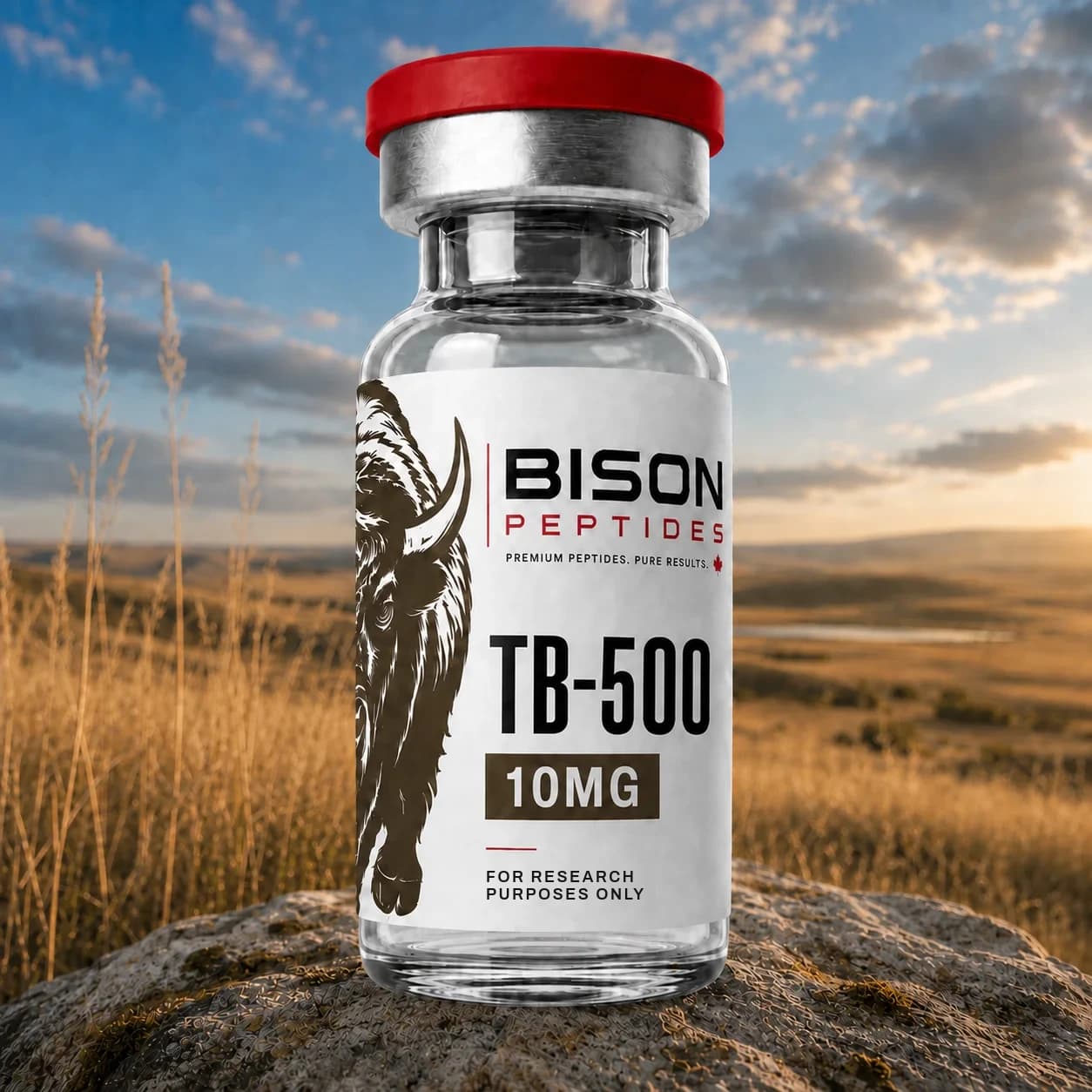
| TB-500 | Thymosin beta-4-related fragment | Actin regulation and cell-migration models | 10mg |
Choose BPC-157 when the specific interest is gastric or localized soft-tissue research. Choose TB-500 when thymosin beta-4 and broader cell-migration biology are the intended focus. Neither has robust human recovery evidence.
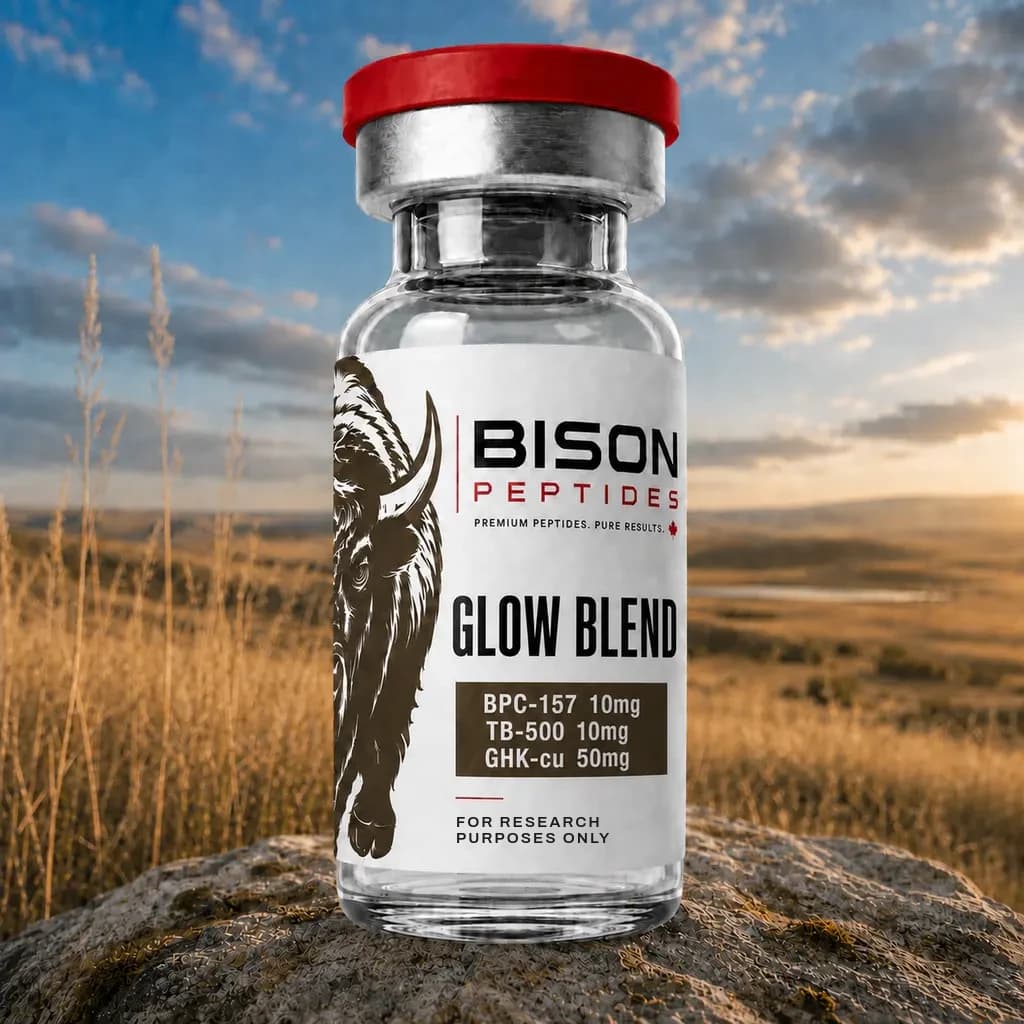
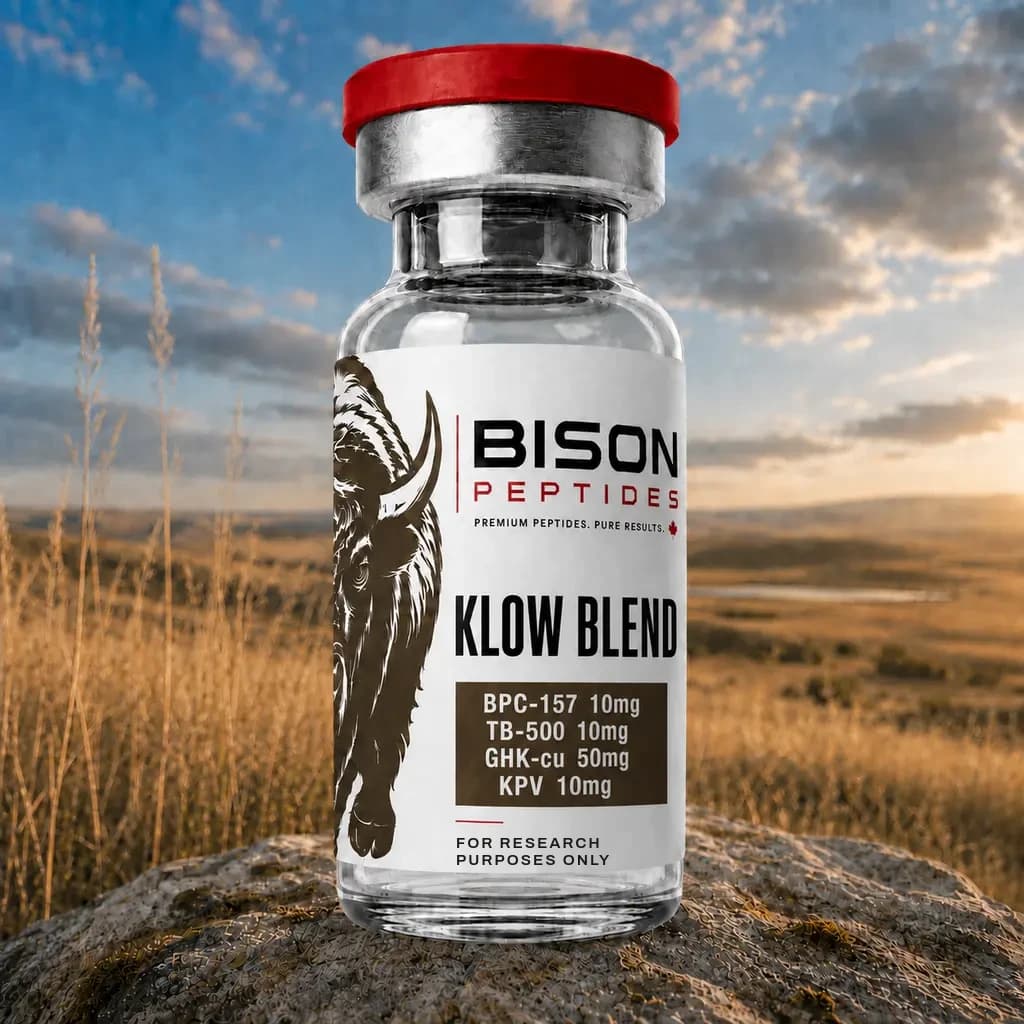
The standalone vial is the clearer choice when BPC-157 itself is the compound of interest. It avoids the fixed ratios in Klow or Glow Blend and makes the product identity, total amount, and COA easier to evaluate independently.
A blend may appeal to someone intentionally comparing several ingredients in one product, but it becomes harder to know which component produced an observed result. Buyers who are new to peptide research or who want the simplest product decision generally benefit from starting with the single-compound format.
The 10mg label states the total nominal amount of lyophilized BPC-157 in the vial. It is not a ready-to-use concentration, a single amount, or a promise about how long the vial will last.
Because Bison currently lists one BPC-157 size, the main buying decision is standalone BPC-157 versus a blend. Choose the 10mg standalone vial when independent product identity and a BPC-specific COA matter more than combining several compounds in one purchase.
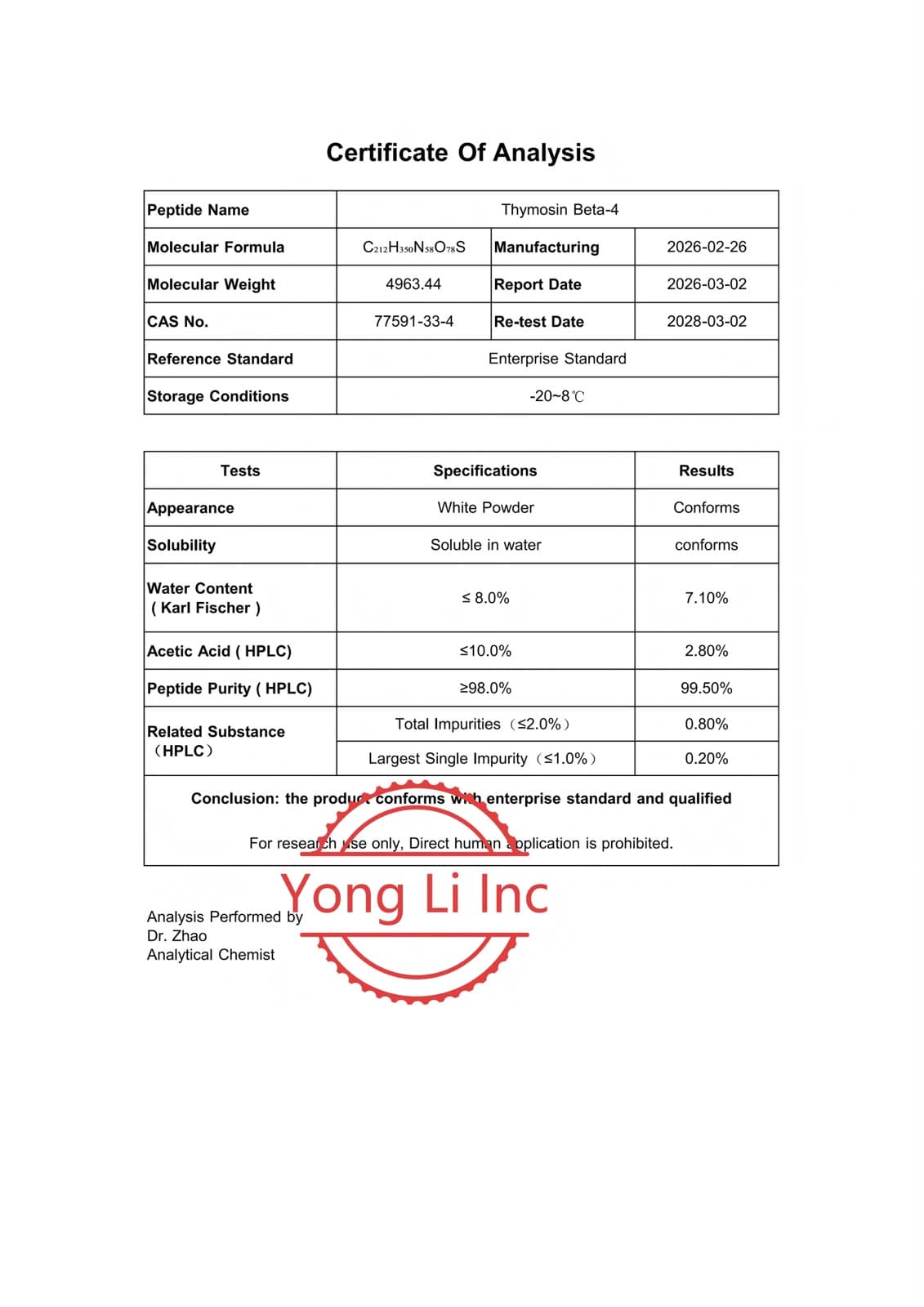
Product-linked certificate of analysis images are displayed in the gallery. Before ordering, confirm that the available certificate identifies the compound or blend, batch or lot, test date, analytical method, and reported result. After delivery, compare the vial label with that exact documentation rather than relying on a generic certificate.
Identity, purity, fill quantity, sterility, and endotoxin testing answer different questions. A large purity percentage does not prove every other quality attribute, so buyers should check which tests are actually reported and avoid assuming that an unlisted result was performed.
The Bison Peptides BPC-157 vial is supplied as a technical laboratory research material, not an authorized prescription formulation. The page summarizes published research to help buyers understand the compound, evidence, and product format; it is not an individual treatment or dosing recommendation.
Content reviewed August 11, 2026 by the Bison Peptides editorial team.
“Everything arrived exactly as described. The vial was well packaged, the label was easy to read, and the overall presentation felt very professional. I have ordered similar products from a few different places and this was one of the smoother experiences. Will definitely keep this supplier in mind.”
10mg ·
Daniel R. · Verified buyer
“First time ordering BPC-157 here and I was impressed with the whole process. Checkout was straightforward, communication was good, and the package arrived without any issues. The vial looked clean and properly sealed. Overall, exactly what I was hoping for.”
10mg ·
Marcus T. · Verified buyer
“My order showed up in good condition and everything matched the website description. Packaging was secure and there was no confusion about what was inside. I would have liked a little more communication after ordering, but the product itself arrived exactly as expected.”
10mg ·
Steven P. · Verified buyer
BPC-157 is most commonly discussed for tendon, ligament, muscle, joint-adjacent, vascular, and gastrointestinal tissue research. Most positive findings come from animal or cell models, so the magnitude and reliability of any human effect remain unknown.
Only a very small amount. A 2026 review identified fewer than 30 participants across the published human literature. That is not enough to establish effectiveness, a standard use, or a dependable safety profile.
They are different compounds. BPC-157 has more preclinical literature involving gastric and localized soft-tissue models, while thymosin beta-4 research focuses more broadly on actin, cell migration, and wound response. There is not enough human evidence to declare either one better for recovery.
It means the vial lists 10mg of total lyophilized BPC-157. It does not describe a prepared concentration, a recommended amount, or how long the vial will last.
Choose standalone BPC-157 when you want one clearly identified compound and a BPC-specific certificate to evaluate. A blend is a different purchase for buyers who intentionally want several fixed ingredients and accept that individual effects are harder to isolate.
Look for the compound name, batch or lot, test date, analytical method, and reported identity or purity result. Do not assume a purity result also proves fill accuracy, sterility, endotoxin level, or stability.
No BPC-157 drug is currently authorized by Health Canada. The Bison vial is supplied as technical research material, not an approved prescription product.