Most common interest
Broad tissue recovery
Thymosin beta-4 biology is linked to actin, cell migration, wound response, and tissue remodeling.
 COA Verified
Healing Peptides
$70.00
Purchase option
Strength
Buy more, save more
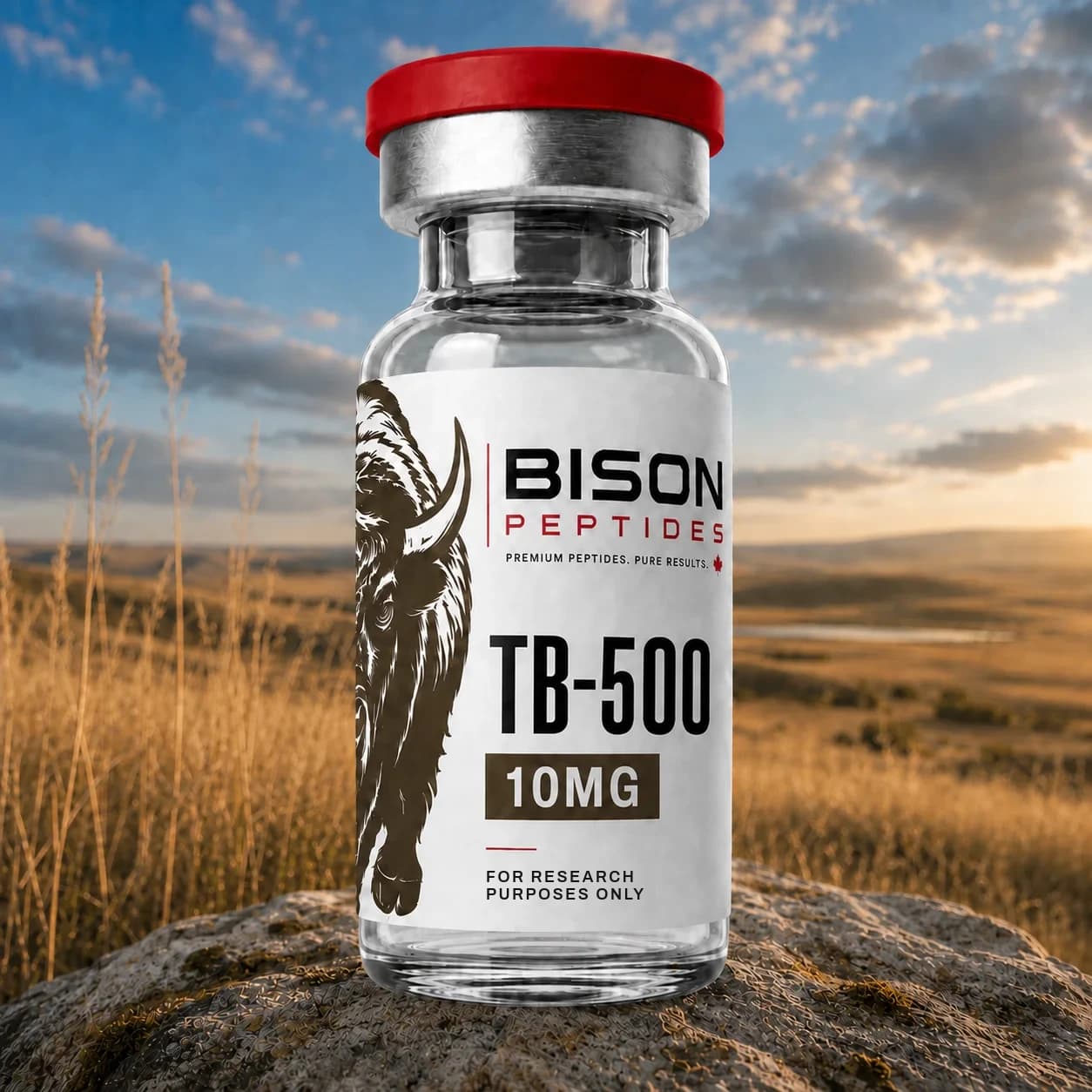
TB-500 is a synthetic research peptide associated with thymosin beta-4 biology and studied in actin-regulation, cell-migration, and tissue-response models. Bison Peptides supplies a 10mg lyophilized vial with product-linked certificate of analysis images.
TB-500 is not an authorized drug and is supplied only for qualified laboratory and in-vitro research. Published thymosin beta-4 findings should not be assumed to describe every commercial fragment.
Orders ship from within Canada in discreet packaging. Express delivery is typically 1–3 business days after dispatch.
Standard returns are not accepted because research materials cannot be safely restocked after delivery. Contact support promptly about damaged, incorrect, or compromised items.
Reconstitution calculator
Enter three known values. The calculator converts the total vial amount and water added into a concentration, then shows the liquid volume and equivalent U-100 syringe units for the quantity entered.
The calculator does not choose a quantity. It converts the quantity you enter. One milligram equals 1,000 micrograms.
Bacteriostatic water is generally the most appropriate choice for multi-use research preparation because it contains a preservative for repeated vial access.
TB-500 buyer and evidence guide
TB-500 is most often compared by people interested in broad soft-tissue recovery, mobility, wound response, and training-related repair. The scientific rationale comes from thymosin beta-4, an actin-binding peptide studied in cell migration, blood-vessel growth, inflammation, and tissue remodeling.
The key buyer question is identity. Commercial TB-500 is described as a thymosin beta-4-related fragment and should not be assumed to be the same material used in every full-length thymosin beta-4 paper. This guide separates the broader evidence from what can reasonably be concluded about a 10mg TB-500 vial.
Most common interest
Thymosin beta-4 biology is linked to actin, cell migration, wound response, and tissue remodeling.
Human evidence
Human studies involve full-length thymosin beta-4 products, mainly ophthalmic or wound-focused formulations.
Important distinction
Sequence and batch identity matter before applying full-length thymosin beta-4 findings.
Product decision
Best for buyers who want TB-500 alone rather than a fixed recovery blend.
The table distinguishes full-length thymosin beta-4 findings from evidence for commercial TB-500 material.
| Evidence | Material and setting | What was reported | Buyer takeaway |
|---|---|---|---|
| Preclinical tissue studies | Full-length thymosin beta-4 in cell and animal models | Cell migration, angiogenesis, and wound-response effects | Supports the pathway, not a predictable human outcome |
| Phase 2 dry-eye study | Thymosin beta-4 ophthalmic solution | Selected signs and symptoms improved in a controlled eye-drop formulation | Not evidence for systemic TB-500 |
| Commercial TB-500 evidence | Supplier-defined thymosin beta-4-related fragments | No robust controlled human recovery trials | Identity and clinical effect remain uncertain |
Full-length thymosin beta-4 products and commercial TB-500 fragments should not be treated as interchangeable without sequence and analytical confirmation.
TB-500 is a supplier name for a synthetic peptide related to thymosin beta-4. Buyers generally look at it when recovery feels broader than one tendon or one digestive target, because thymosin beta-4 participates in actin organization and cellular movement across many tissues.
That broad mechanism is also the main source of confusion. A result from full-length thymosin beta-4 eye drops, wound formulations, or animal experiments does not automatically prove that a commercial TB-500 fragment will behave the same way. The exact sequence and COA are part of the product decision, not minor technical details.
Preclinical thymosin beta-4 studies report effects involving cell migration, angiogenesis, collagen organization, inflammation, and repair in dermal, corneal, cardiac, and other injury models. Small human programs have evaluated specific full-length thymosin beta-4 formulations, including ophthalmic products for dry-eye and corneal-wound settings.
The evidence is therefore stronger for the biological pathway than for TB-500 as sold online. Buyers should not read a thymosin beta-4 clinical result as a guarantee of faster recovery, less pain, or improved performance from a differently identified fragment.
The two compounds appear in different areas of preclinical tissue-response research and should not be treated as substitutes.
| Compound | Research class | Common experimental context | Listed vial |
|---|---|---|---|
| TB-500 | Thymosin beta-4-related fragment | Actin and cell-migration models | 10mg |
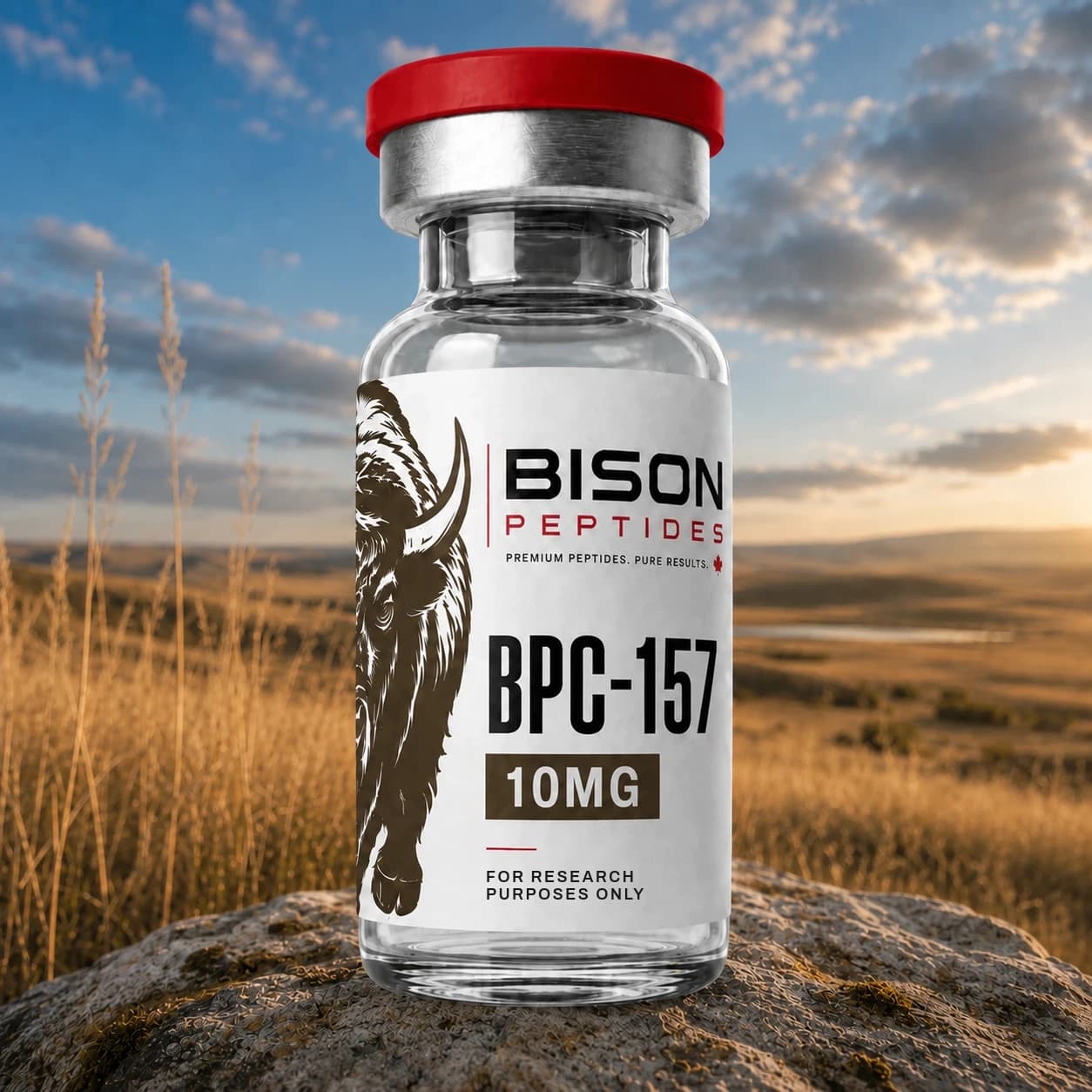
| BPC-157 | Synthetic pentadecapeptide | Gastrointestinal, vascular, and tissue-response models | 10mg |
BPC-157 is commonly chosen for localized soft-tissue or gut-related interest. TB-500 is commonly chosen for the broader actin and cell-migration rationale. Neither comparison establishes a superior human recovery option.
Standalone TB-500 is the clearer choice for someone specifically comparing thymosin beta-4-related biology and wanting a single product identity. It also avoids the fixed ingredients and attribution problems of multi-peptide recovery blends.
BPC-157 may be the more direct comparison when the interest is localized tendon, ligament, or gastrointestinal research. TB-500 is usually considered for the broader cell-migration and tissue-remodeling rationale. Neither choice has strong clinical evidence for general sports-injury recovery.
The 10mg label is the total nominal amount of listed TB-500 material in the vial. It does not describe a ready-to-use concentration, a personal amount, or how long the vial will last.
Bison currently lists one TB-500 size, so the practical decision is standalone TB-500 versus BPC-157 or a blend. Choose standalone TB-500 when a clearly isolated thymosin beta-4-related product is more important than combining recovery compounds.
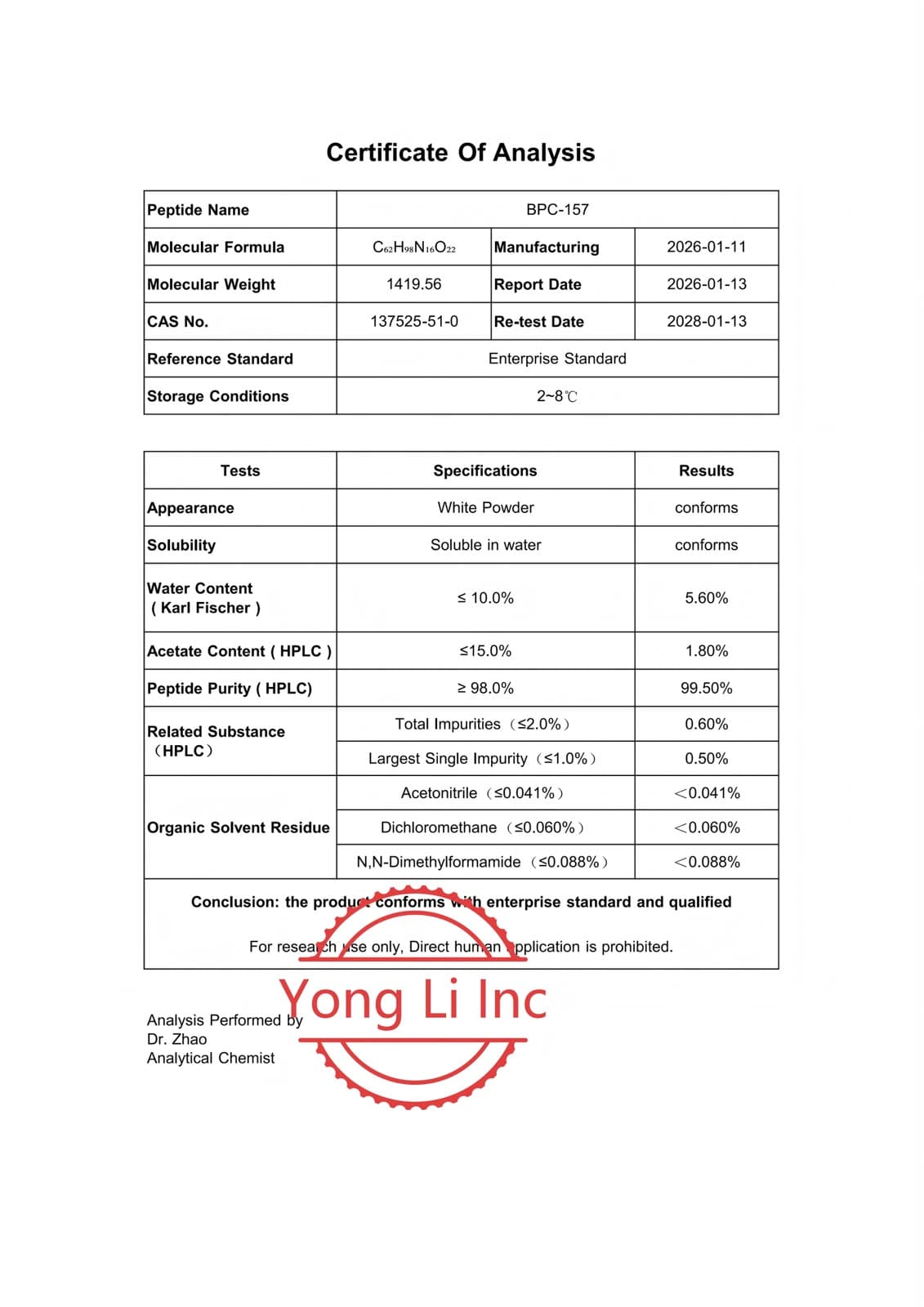
Product-linked certificate of analysis images are displayed in the gallery. Before ordering, confirm that the available certificate identifies the compound or blend, batch or lot, test date, analytical method, and reported result. After delivery, compare the vial label with that exact documentation rather than relying on a generic certificate.
Identity, purity, fill quantity, sterility, and endotoxin testing answer different questions. A large purity percentage does not prove every other quality attribute, so buyers should check which tests are actually reported and avoid assuming that an unlisted result was performed.
The Bison Peptides TB-500 vial is supplied as a technical laboratory research material, not an authorized prescription formulation. The page summarizes published research to help buyers understand the compound, evidence, and product format; it is not an individual treatment or dosing recommendation.
Content reviewed August 11, 2026 by the Bison Peptides editorial team.
“Really straightforward experience. I ordered the TB-500 10mg, received my confirmation right away, and the vial showed up securely packaged. Everything looked clean and professionally labeled. Nothing complicated about the process, which is exactly what I wanted.”
10mg ·
Ryan D. · Verified buyer
“The packaging and attention to detail stood out to me. The vial was properly protected during shipping and arrived in excellent condition. Product information was clear on the site and I knew exactly what I was ordering. Very satisfied with my first purchase.”
10mg ·
Chris F. · Verified buyer
“I have tried a couple of Canadian suppliers and this was one of the better ordering experiences. The TB-500 arrived exactly as described and the packaging felt professional rather than thrown together. Everything was sealed and clearly marked. I plan on coming back when I need another vial.”
10mg ·
Brandon H. · Verified buyer
TB-500 is commonly discussed for soft-tissue recovery, mobility, wound response, and training-related repair because thymosin beta-4 biology involves actin, cell migration, angiogenesis, and tissue remodeling.
Not automatically. TB-500 is a commercial name commonly used for a thymosin beta-4-related fragment. Full-length thymosin beta-4 findings should not be assigned to a TB-500 product unless sequence and batch identity support that comparison.
Robust controlled human recovery studies of commercial TB-500 are lacking. Some human studies used specific full-length thymosin beta-4 eye or wound formulations, which are not equivalent to a supplier-defined TB-500 vial.
There is not enough human evidence to call either better. BPC-157 has more localized tendon, ligament, and gastrointestinal animal research, while thymosin beta-4 research has a broader actin, cell-migration, and tissue-remodeling focus.
It means the vial lists 10mg of total lyophilized TB-500 material. It does not define concentration after preparation, a recommended amount, or a duration of use.
Standalone TB-500 is easier to evaluate when the thymosin beta-4-related compound is your specific interest. A blend fixes several ingredients together and makes the effect of any one component harder to isolate.
Check the exact product identity or sequence if reported, batch or lot, test date, analytical method, and purity or identity result. Do not assume a purity percentage proves sterility, endotoxin control, or fill accuracy.