Primary buyer interest
Skin and collagen
GHK-Cu is studied in fibroblasts, collagen production, matrix remodeling, and skin-delivery systems.
 COA Verified
Antioxidant Peptides
$85.00
Purchase option
Strength
Buy more, save more
GHK-Cu is the copper complex of the tripeptide glycyl-L-histidyl-L-lysine. Research examines copper binding, fibroblast activity, collagen and glycosaminoglycan accumulation, and extracellular-matrix remodeling.
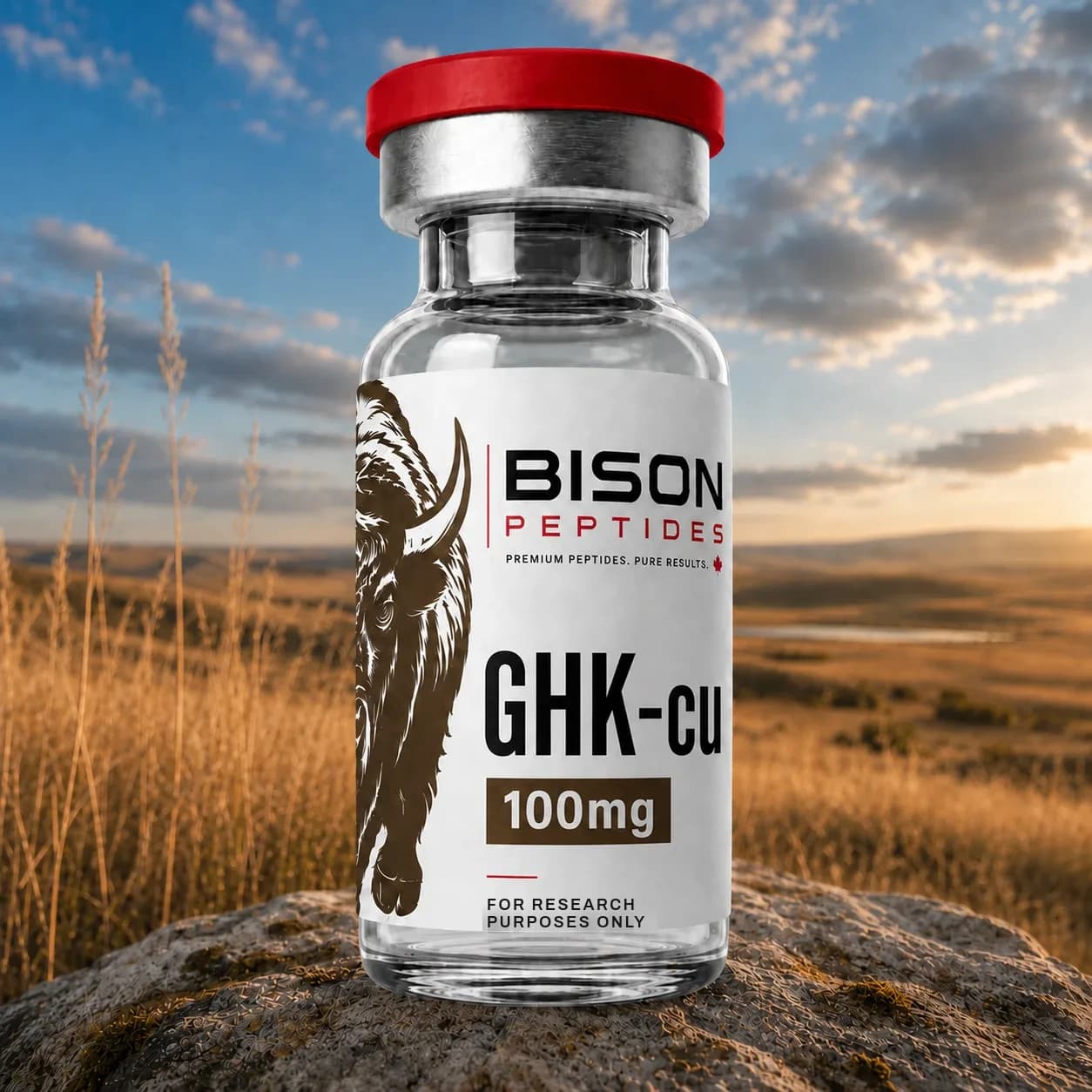
Bison Peptides supplies a 100mg lyophilized research vial with product-linked testing and certificate of analysis images. It is not an authorized injectable drug and is not intended for human or veterinary administration.
Orders ship from within Canada in discreet packaging. Express delivery is typically 1–3 business days after dispatch.
Standard returns are not accepted because research materials cannot be safely restocked after delivery. Contact support promptly about damaged, incorrect, or compromised items.
Reconstitution calculator
Enter three known values. The calculator converts the total vial amount and water added into a concentration, then shows the liquid volume and equivalent U-100 syringe units for the quantity entered.
The calculator does not choose a quantity. It converts the quantity you enter. One milligram equals 1,000 micrograms.
Bacteriostatic water is generally the most appropriate choice for multi-use research preparation because it contains a preservative for repeated vial access.
GHK-Cu buyer and evidence guide
GHK-Cu is usually compared by buyers interested in skin quality, collagen, fine lines, hair, wound response, and connective-tissue research. It is a naturally occurring tripeptide complexed with copper, and much of its scientific interest comes from fibroblast, extracellular-matrix, collagen, and gene-expression studies.
The key evidence distinction is route and formulation. The most relevant cosmetic literature involves topical products, skin penetration, cells, or animals. That does not establish the safety or cosmetic effect of injecting a 100mg research vial. This page helps buyers separate the copper-peptide rationale from claims the evidence does not yet support.
Primary buyer interest
GHK-Cu is studied in fibroblasts, collagen production, matrix remodeling, and skin-delivery systems.
Secondary interest
Preclinical literature includes follicles, tissue repair, angiogenesis, and inflammatory signaling.
Evidence reality
Skin and formulation studies do not validate injectable cosmetic claims.
Product decision
Standalone GHK-Cu offers more copper peptide and clearer attribution than Glow or Klow Blend.
Evidence is strongest for molecular and topical skin relevance, with fewer controlled human outcome data.
| Evidence | What was studied | What was reported | Buyer takeaway |
|---|---|---|---|
| Cell and tissue studies | Fibroblasts, collagen, matrix enzymes, and wound signaling | Changes in extracellular-matrix and repair-related markers | Strong mechanistic rationale, not a visible-result guarantee |
| Animal wound models | Topical or local GHK-Cu formulations | Selected repair, angiogenesis, and tissue-quality effects | Preclinical and formulation-specific |
| Human-skin delivery studies | Intact or microneedle-treated skin | GHK-Cu penetration depended heavily on delivery method | Route and formulation materially change relevance |
| Injectable cosmetic outcomes | Controlled human trials | Not established | Do not transfer topical claims to injection |
A GHK-Cu vial and a finished topical cosmetic are different products. Evidence should be matched to formulation and route.
GHK is made from glycine, histidine, and lysine. It binds copper to form GHK-Cu, a blue copper-peptide complex associated with cellular signaling, wound response, and extracellular-matrix regulation. That combination is why it appears in premium skincare and regenerative-research discussions.
For buyers, GHK-Cu is most defensible as a focused copper-peptide research product. Claims about firmer skin, fewer lines, thicker hair, or faster repair should be traced back to the actual formulation and study rather than transferred from a topical cosmetic to a lyophilized vial.
Published work reports changes in collagen and glycosaminoglycan accumulation, fibroblast behavior, matrix metalloproteinases, angiogenesis, inflammatory signaling, and tissue remodeling. Other studies focus on whether GHK-Cu can cross skin or be delivered by topical and microneedle systems.
The evidence supports a plausible skin and matrix mechanism, but human outcome data are limited and formulation-specific. Hair-growth claims are even less certain, and injectable GHK-Cu has not been validated as a cosmetic shortcut. Buyers should expect a research compound, not a guaranteed visible transformation or timeline.
The standalone vial and the multi-component blend support different experimental controls.
| Product | Listed composition | Attribution | Bison format |
|---|---|---|---|
| GHK-Cu | Copper tripeptide | Single listed test article | 100mg |
| Glow Blend | BPC-157, GHK-Cu, and Epitalon | Multi-component response | 70mg total |
Choose standalone GHK-Cu for focused copper-peptide research and clearer attribution. Choose Glow Blend only when BPC-157 and TB-500 are intentional additions.
The 100mg standalone vial is the clearest fit when copper-peptide, skin, collagen, or matrix research is the priority. It contains twice the GHK-Cu listed in Glow or Klow Blend and avoids adding BPC-157, TB-500, or KPV when those ingredients are not part of the goal.
Glow Blend is the convenience option for buyers who intentionally want GHK-Cu 50mg with BPC-157 10mg and TB-500 10mg. Klow adds KPV 10mg to that same base. More ingredients broaden the concept but make it harder to attribute an observed effect.
The 100mg label states the total nominal amount of listed GHK-Cu material in the vial. It does not describe a ready-to-use concentration, a cosmetic formula percentage, or how long the product will last.
Choose standalone GHK-Cu when you want the largest copper-peptide quantity in the catalog and the cleanest single-ingredient attribution. Choose Glow or Klow only when their additional recovery ingredients are intentional rather than assuming a blend is automatically better.
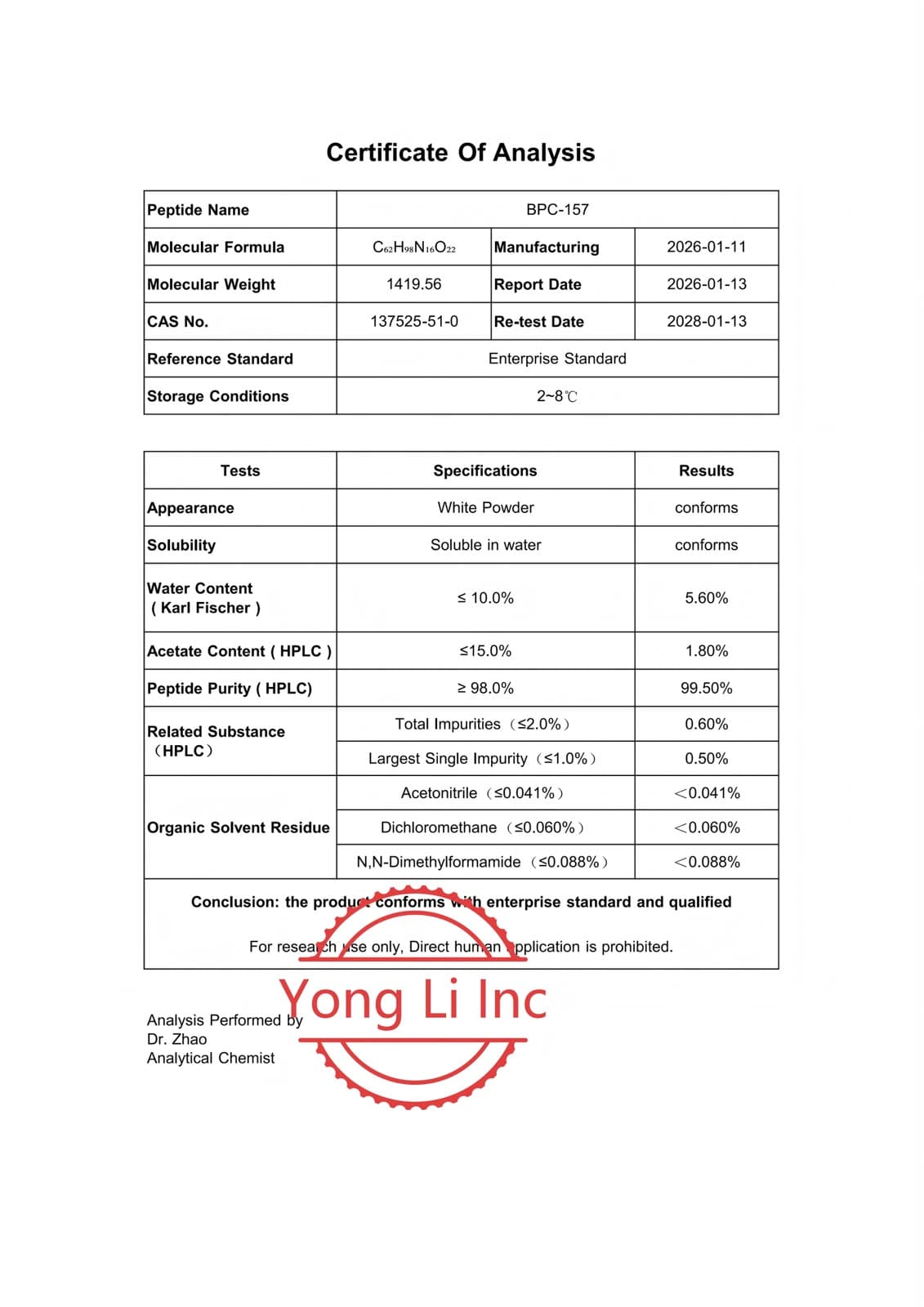
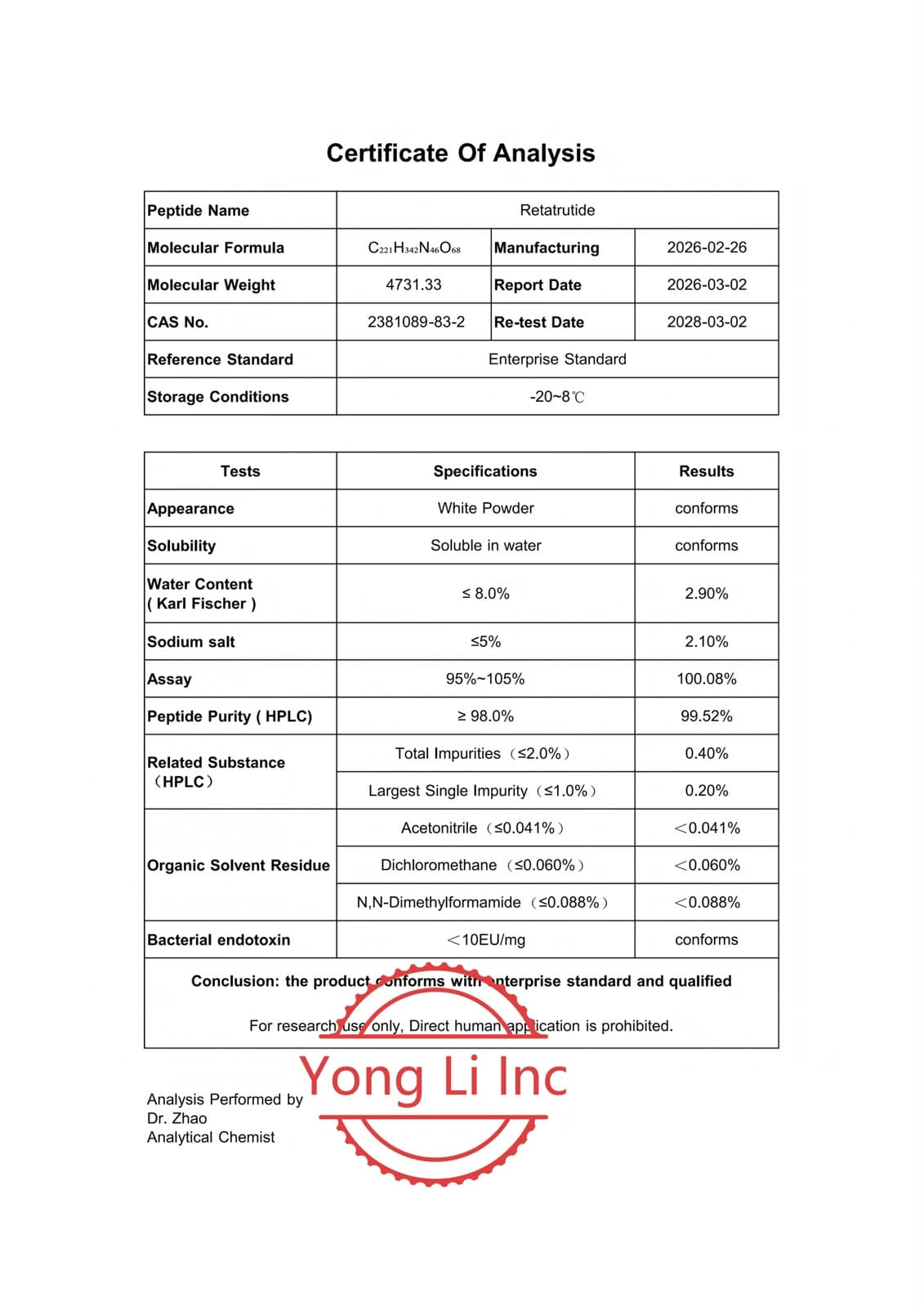
Product-linked testing and certificate of analysis images are displayed in the gallery. Before ordering, confirm that the available certificate identifies the compound or blend, batch or lot, test date, analytical method, and reported result. After delivery, compare the vial label with that exact documentation rather than relying on a generic certificate.
Identity, purity, fill quantity, sterility, and endotoxin testing answer different questions. A large purity percentage does not prove every other quality attribute, so buyers should check which tests are actually reported and avoid assuming that an unlisted result was performed.
The Bison Peptides GHK-Cu vial is supplied as a technical laboratory research material, not an authorized prescription formulation. The page summarizes published research to help buyers understand the compound, evidence, and product format; it is not an individual treatment or dosing recommendation.
Content reviewed August 11, 2026 by the Bison Peptides editorial team.
“I was specifically looking for GHK-Cu in a larger 100mg size and was happy to find it here. The vial arrived securely packaged with clear labeling and everything looked very professional. The whole process from browsing to receiving my package was simple.”
100mg ·
Emily W. · Verified buyer
“Very impressed with the presentation of the GHK-Cu. The vial was protected well during shipping and there was no confusion about the strength or product when it arrived. The website was easy to order from too. Overall this was a great first experience.”
100mg ·
Olivia R. · Verified buyer
“I've now placed two orders for the 100mg GHK-Cu and both have been consistent. The packaging has been secure, the vials arrived in excellent condition, and everything matched the product listing. I appreciate knowing that the experience will be the same each time I order.”
100mg ·
Rebecca N. · Verified buyer
GHK-Cu is commonly researched for fibroblast activity, collagen, extracellular-matrix remodeling, wound response, oxidative signaling, skin delivery, and hair-related biology. Most evidence is mechanistic, preclinical, or topical.
The copper peptide has a plausible skin and collagen rationale, and some formulation studies report cosmetic-relevant findings. Evidence is limited and product-specific, so it does not guarantee visible improvement from a lyophilized research vial.
Hair and follicle biology are part of the research discussion, but controlled human evidence is not strong enough to promise hair regrowth or a dependable timeline.
No. The most relevant skin evidence involves topical formulations, cells, tissue, animals, or skin-delivery experiments. That evidence should not be transferred to injectable cosmetic claims.
It means the vial lists 100mg of total GHK-Cu material. It does not define a prepared concentration, a topical percentage, a recommended amount, or a duration of use.
Choose standalone GHK-Cu for focused copper-peptide research, more total GHK-Cu, and clearer attribution. Choose Glow Blend when you intentionally want GHK-Cu 50mg combined with BPC-157 10mg and TB-500 10mg.
Look for the GHK-Cu identity, batch or lot, test date, analytical method, and reported identity or purity. Ideally the documentation clarifies whether the result refers to the peptide, copper complex, or another defined chemical basis.